
Before electricity
OUR STORY · LIGHT, MADE HUMAN
From a tiny glow to light that fits your life.
A short, simple guide to how LEDs began, how strip lights work, and how we bring a thoughtful glow into wood.
Follow the light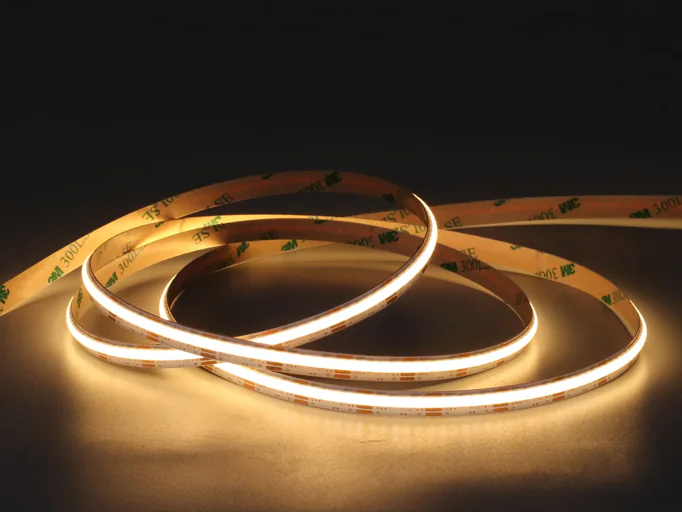

01 · THE PATH TO LED
Light has a long story.
People did not invent light itself; we learned to make useful light in more and more practical ways.
1800s
Practical electric lamps
Many inventors improved electric lamps. Edison and Swan helped make the heated-filament incandescent lamp more practical.1907
A curious glow
H. J. Round described light from an electrically powered silicon-carbide crystal—the early clue behind LEDs.1962
A visible red LED
Nick Holonyak Jr. demonstrated the first practical visible red LED. Early LEDs were mostly tiny indicator lights.1990s
Blue opens the door
Efficient blue LEDs made bright white LED lighting practical, including blue light paired with phosphor.A major turning point came when Isamu Akasaki, Hiroshi Amano, and Shuji Nakamura developed efficient blue LEDs. Their work earned the 2014 Nobel Prize in Physics and helped make bright, efficient white LEDs possible.
02 · THE SMALL SCIENCE
How does an LED make light?
LED means light-emitting diode. Inside it, electricity moves tiny particles called electrons and “holes” through a semiconductor. When they meet, some of their energy leaves as light.
The semiconductor’s recipe sets the light’s basic colour. A blue chip and a phosphor layer can make white; separate red, green, and blue LEDs can also mix into white or colour.
03 · FLEXIBLE LIGHT
What is inside an LED strip?
It is a small lighting system on a bendable circuit—not just a row of bulbs.
LED chipsCreate the light.
Circuit and copper pathsCarry power along the strip.
Current controlHelps each section operate as designed.
Cut marks and adhesiveMake sizing and fitting easier when used as directed.
Power supplyMatches the strip’s voltage and total power requirement.
One fixed colour
Single-colour
A simple choice for a steady warm, neutral, cool, or coloured glow.
One or two white tones
White / CCT
Tunable-white strips blend warm and cool white LEDs to change the mood.
Colour mixing
RGB / RGBW
Red, green, and blue LEDs mix into many colours. RGBW adds a separate white LED.
Chip layout
SMD / COB
SMD chips are visible packages. COB packs many small chips close together for a smoother line.
These names describe different features and can overlap: a COB strip, for example, can be warm white or tunable white. Always cut only at the printed cut marks and use a correctly matched power supply.
04 · A SMOOTHER LINE
What makes COB light different?
COB means chip on board. Many tiny LED chips sit close together beneath a continuous phosphor-coated silicone layer, so the light looks more like one smooth line.
During manufacture, liquid silicone carrying phosphor is applied over the blue chips and cured into a smooth layer. The phosphor—not the silicone by itself—absorbs some blue light and re-emits longer-wavelength light. That light blends with the blue that remains to create white. The phosphor mix helps shape the final tone and colour quality.
05 · CHOOSING WELL
How can you judge LED quality?
LED count is only one clue. Look at the complete strip, power supply, and installation.
Colour temperature (Kelvin) describes whether white looks warmer or cooler; it does not, on its own, tell you how bright or high-quality a strip is.




06 · LIGHT, WITH A NATURAL FRAME
Wood brings the glow home.
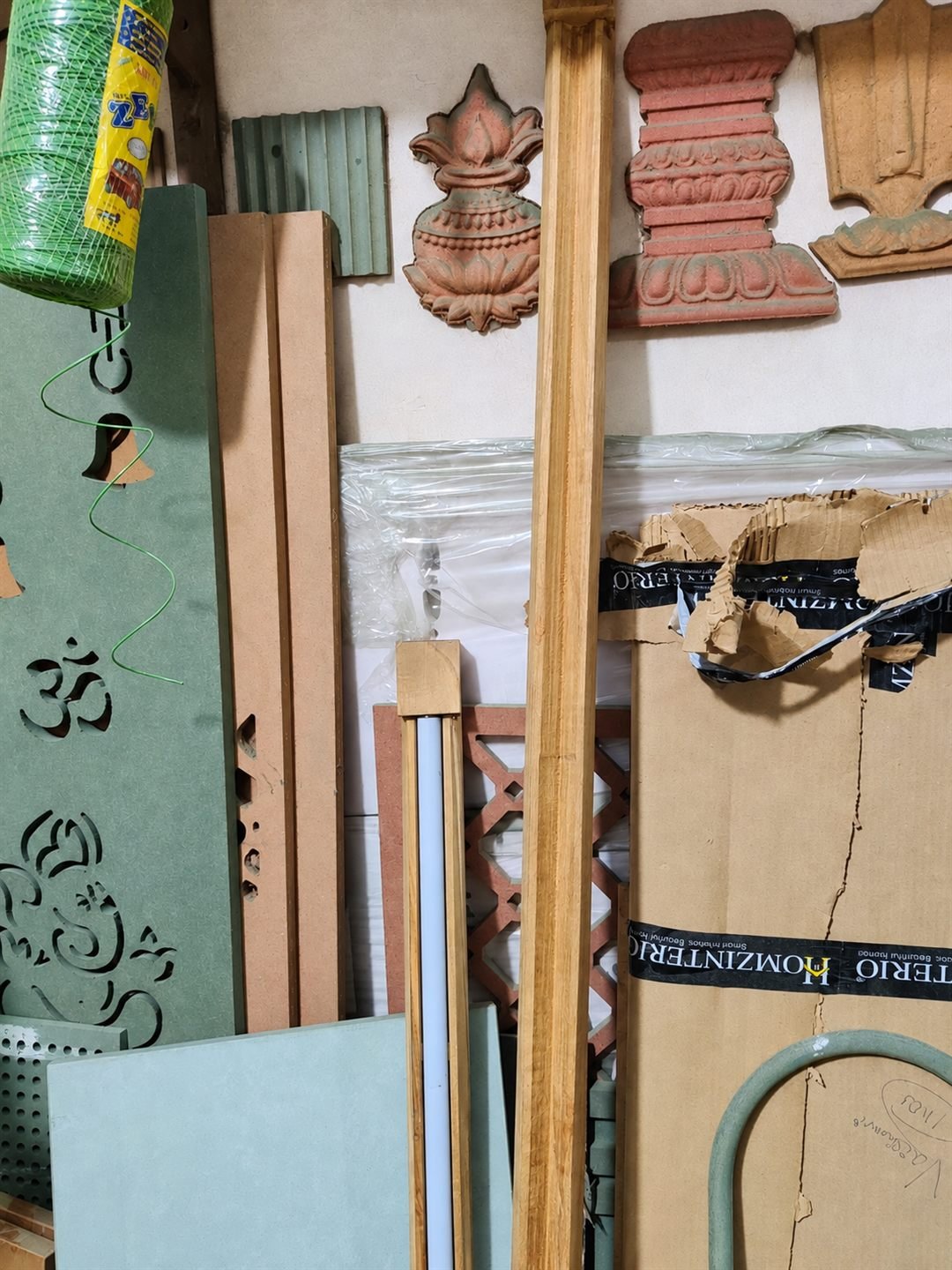
Wood does not emit light. It gives a linear light a warm, natural form. A carefully placed LED strip and diffuser can spread an even glow along a shelf, desk, or wall while using less energy than an older incandescent lamp for comparable light.
A well-designed wooden light also needs safe wiring, suitable components, and room to manage heat. The wood frames the light; the LEDs and driver do the work.
Made with tomorrow in mind.Every wood product from LakDlights helps plant seeds, which we aim to nurture for as long as possible.
Want to read further?Smithsonian: Swan, Edison, and practical electric lamps · Illinois ECE: the first visible LED · Department of Energy: LED basics · Nobel Prize: blue LEDs and white light · ENERGY STAR: LED efficiency and heat · Computer History Museum: the early LED story